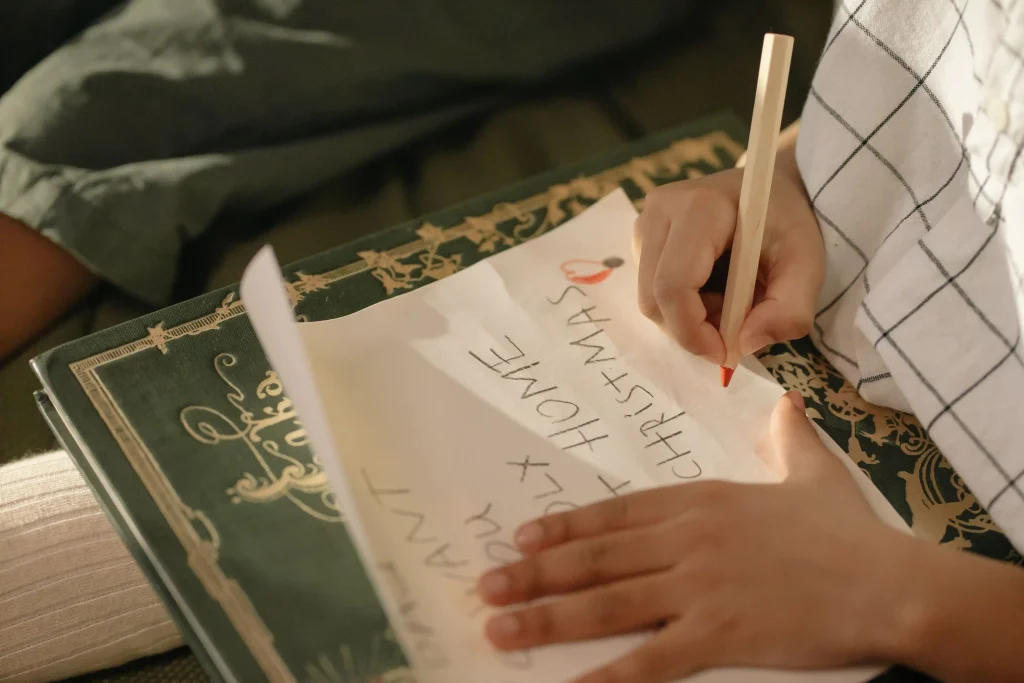

Christmas had always been the most meaningful time of the year for Emily Carter. When she was a child, the holidays meant a house filled with the smell of freshly baked cookies, sparkling lights around the windows, familiar Christmas songs playing in the background, and the sound of her family laughing around the dinner table. Her mother, Margaret, had a special way of making even the simplest celebrations feel magical. She believed Christmas was not about expensive gifts or perfect decorations. It was about being together, forgiving one another, and making memories that would last long after the decorations were packed away.
But as the years passed, the family that once gathered around the same Christmas table slowly drifted apart. Arguments, misunderstandings, and unspoken disappointments created distances that became harder to cross. When Margaret passed away, the family lost more than a loving mother. They also lost the person who had always found a way to bring everyone home.
Three Christmases later, Emily discovered something that would change the way she looked at her family, her mother’s memory, and the meaning of the holidays. Hidden inside an old wooden box was a handwritten Christmas letter Margaret had written shortly before her death. Its message was simple, but its meaning was powerful: no family should allow pride and silence to become stronger than love.
Inspired by her mother’s final words, Emily began a journey to reconnect with the people she had once called home. What followed was an emotional reminder that sometimes the greatest Christmas gift is not something wrapped beneath a tree, but the chance to begin again.
A Christmas That No Longer Felt the Same
Emily remembered the Christmases of her childhood as the happiest days of the year. Her mother always started decorating the house during the first week of December. She would bring out boxes of ornaments, carefully untangle strings of lights, and ask Emily and her older brother, Daniel, to help decorate the Christmas tree.
Their father, Robert, usually handled the outdoor decorations, although Margaret often reminded him that the lights needed to be straight. Their kitchen became the center of every celebration, filled with homemade desserts, warm drinks, and the delicious smell of their mother’s cooking.
Every Christmas Eve, the family followed the same tradition. They gathered around the dining table, shared a special meal, exchanged small gifts, and took a photograph in front of the tree. Margaret always insisted that everyone put their phones away during dinner. She wanted them to enjoy the moment instead of worrying about what was happening elsewhere.
However, things changed when Daniel and Robert had a serious disagreement over the family business. What began as a difference of opinion turned into an argument that neither was willing to forget. Daniel eventually moved to another city, and communication between father and son became limited to occasional messages.
Emily tried to remain close to both of them, but she often felt caught in the middle. She loved her father and brother equally, yet every conversation about the family seemed to return to the same painful disagreement.
After Margaret became ill, everyone briefly put their differences aside. They visited her, helped with appointments, and spent time together when they could. But after her passing, the old tensions returned. Without Margaret to encourage conversations and organize family gatherings, everyone gradually went their separate ways.
Now, three years later, Christmas had become a quiet occasion for Emily. She still decorated her small home, but the celebrations felt incomplete. The empty space around her dining table reminded her of the family traditions that had disappeared.
The Unexpected Discovery in an Old Wooden Box
One cold December afternoon, Emily decided to organize the storage room in her childhood home. Her father had asked her to sort through some old belongings before he donated furniture and other items they no longer needed.
While moving boxes from an old cabinet, she discovered a small wooden keepsake box decorated with faded Christmas stars. She immediately recognized it. Her mother used it to store photographs, handwritten recipes, birthday cards, and other sentimental items.
Emily carefully opened the lid. Inside were old family photographs, a few Christmas cards, a faded ribbon, and a folded envelope with her name written on the front.
The handwriting was unmistakably her mother’s.
Her hands trembled as she opened the envelope. The letter was dated several months before Margaret passed away. Emily sat on the floor beside the box and began reading.
Her mother wrote about the Christmases they had shared, the happiness she felt watching her children grow, and how proud she was of the people they had become. She also mentioned the disagreement between Robert and Daniel. Margaret admitted that she worried their relationship might remain broken if neither of them found the courage to take the first step.
One sentence stood out to Emily:
“One day, the house may be quieter, and the people around this table may have their own lives, but I hope you never forget that you will always have a place with one another.”
The letter continued with a request. Margaret asked Emily to remember that family relationships were worth caring for, even when they became difficult. She did not demand that anyone forget what had happened or pretend that every disagreement could disappear overnight. She simply hoped her children would never allow a painful moment to erase all the years of love they had shared.
At the end of the letter, Margaret wrote that her greatest Christmas wish was to see her family sitting together again.
Emily held the paper against her chest and cried. For the first time in years, she felt that her mother had left her something more meaningful than a photograph or an old family recipe. She had left her a reason to try.
A Daughter’s Decision to Bring Everyone Home
That evening, Emily placed the letter on her kitchen table and read it again. She wondered whether her father and brother would be willing to listen. She knew the disagreement had hurt both of them, and she understood that simply inviting them to Christmas dinner would not automatically solve everything.
Still, she decided to make an effort.
Her first call was to Daniel. She had not spoken with him properly in several months, and their recent conversations had been brief. When he answered, she asked how he was doing and told him she had found something that belonged to their mother.
Daniel became quiet when Emily mentioned the Christmas letter.
She explained what their mother had written and asked whether he would consider coming home for Christmas. He did not give her an immediate answer. He said that he missed their mother, but he was not sure he was ready to sit across from their father as if nothing had happened.
Emily understood his hesitation. She told him she was not asking him to forget the past or pretend everything was fine. She only wanted them to have an opportunity to talk.
A few days later, Emily visited Robert. She showed him the letter and watched as he carefully read every line. Her father tried to remain composed, but his eyes filled with tears when he reached the final paragraph.
Robert admitted that he missed Daniel more than he had allowed himself to say. He had wanted to contact his son many times, but pride and fear had stopped him. He worried that Daniel would reject him or that another conversation would turn into an argument.
Emily gently reminded him that her mother had not asked the family to become perfect. She had simply hoped they would try to reconnect.
For the first time in a long while, Robert agreed that he was willing to make the first move.
The Difficult Conversation That Changed Everything
Reconciliation did not happen overnight. Before Christmas arrived, Robert sent Daniel a message asking whether they could talk. Daniel agreed to a phone call, although both men were uncertain about what to say.
Their first conversation was uncomfortable. Old frustrations resurfaced, and each remembered the disagreement differently. There were moments when the discussion nearly ended, but Emily encouraged them to listen rather than immediately defend themselves.
Eventually, Robert apologized for the way he had handled their argument. He acknowledged that he had been too controlling and that he had allowed his disappointment to affect their relationship. Daniel also admitted that he had avoided difficult conversations for too long and that leaving without properly explaining his feelings had made the distance worse.
Neither expected the other to forget everything immediately. But the apology created an opening that had been missing for years.
They agreed to meet before Christmas.
When Daniel arrived at the family home, Emily watched from the doorway as he stood uncertainly beside his car. Robert stepped outside. For several seconds, neither man moved. Then Robert walked toward his son and extended his arms.
Daniel accepted the embrace.
It was not a dramatic moment filled with perfect words. It was quiet, emotional, and perhaps a little awkward. But it was real. For Emily, seeing them together again was more meaningful than anything she could have asked for that Christmas.
Preparing for a Christmas Filled with New Hope
With the family beginning to reconnect, Emily decided to bring back some of her mother’s favorite holiday traditions. She decorated the house with the old ornaments from the wooden box, placed the familiar Christmas lights around the windows, and brought out the special tablecloth Margaret used every year.
Daniel offered to help hang the outdoor lights, while Robert prepared the living room. Their conversations were still careful, but the tension that once filled the house had started to soften.
Emily also found her mother’s handwritten recipes. One was for a traditional Christmas dessert that the family had enjoyed since she was young. She and Daniel decided to prepare it together, laughing when they realized neither of them remembered the exact measurements.
They made mistakes, used too much flour, and had to start again. Yet the kitchen felt alive in a way it had not for years.
As Christmas approached, Emily realized that bringing people together was not about recreating the past exactly. Her mother was no longer there to organize everything, and the family had changed. But they could still carry forward the traditions that mattered while creating new memories of their own.
The Last Christmas Letter Becomes a Family Tradition
On Christmas Eve, the family gathered around the dining table for the first time in years. Robert sat at the head of the table, while Daniel took the chair beside him. Emily placed her mother’s favorite photograph near the center, surrounded by a few candles and small Christmas decorations.
Before dinner, she took the letter from its envelope.
She asked everyone to listen as she read it aloud. Her voice occasionally broke, especially when she reached the words about keeping a place for one another. Robert wiped his eyes, while Daniel looked down at the table.
When she finished, the room remained quiet for a moment.
Then Robert raised his glass and thanked his children for coming home. He admitted that the past few years had been difficult and that he wished he had handled certain things differently. Daniel reached over and placed a hand on his father’s shoulder.
They talked about Margaret, sharing stories that made them laugh and cry. They remembered her habit of singing Christmas songs while cooking, the way she insisted on taking family photographs, and how she always made extra food because she believed someone might unexpectedly stop by.
For the first time in a long time, Christmas felt like Christmas again.
The family did not pretend that every problem had disappeared. They understood that rebuilding a relationship would require more conversations, patience, and effort after the holiday season. But they had taken the first step, and that mattered.
Before dinner ended, Emily suggested starting a new tradition. Every Christmas Eve, each family member would write a short letter about something they appreciated, a memory they wanted to preserve, or a hope for the coming year. The letters would be placed in the wooden box and read together during a future Christmas celebration.
Everyone agreed.
The Meaning of Forgiveness During the Holiday Season
Emily’s journey reminds us that family relationships can become complicated. Disagreements, misunderstandings, distance, and unresolved feelings can sometimes separate people who once shared everything. During the holidays, these distances may feel even more noticeable because Christmas is often associated with togetherness and familiar family traditions.
However, forgiveness does not mean pretending that painful experiences never happened. It does not require people to ignore their feelings or immediately return to relationships that may still need time and care. Meaningful reconciliation begins with honesty, respectful communication, and a willingness to understand one another.
For some families, reconnecting may begin with a phone call, a handwritten note, or a simple invitation. For others, it may take longer. The important thing is to recognize that every relationship has its own circumstances and that reconciliation should not be forced.
The holidays can also be an opportunity to honor loved ones who are no longer present. Families may choose to prepare a favorite recipe, display photographs, share memories, or continue meaningful traditions. These small acts can help preserve a person’s place in the family’s story.
Guidance from grief organizations also highlights the value of remembering loved ones through meaningful holiday activities and adapting traditions to fit a family’s changing circumstances. The National Alliance for Children’s Grief, for example, suggests activities such as sharing memories, preparing favorite foods, and creating keepsakes in remembrance of someone who has died.
Finding Comfort in Small Moments and Creative Traditions
Not every meaningful holiday moment needs to involve a large gathering or an expensive celebration. Sometimes happiness comes from preparing a favorite meal, decorating a small tree, watching a Christmas movie, or spending a peaceful afternoon with someone you love.
Emily discovered that even simple activities could help her family reconnect. Cooking together gave them a reason to talk without feeling pressured to discuss difficult subjects immediately. Decorating the house allowed them to remember their mother while creating something new.
For people who enjoy quiet holiday activities, creative hobbies can also make the season feel more personal. Coloring, journaling, crafting, and preparing handmade decorations offer opportunities to slow down and enjoy a little time away from everyday responsibilities.
A thoughtful addition to a relaxing holiday afternoon could be the Blondegasm Slay Bundle Cleansing, Conditioning & Scented Hair Mist Kit. It can be part of a personal care routine when preparing for a holiday gathering or simply taking time to feel refreshed and cared for during a busy season.
Self-care does not have to be complicated. A few quiet moments, a favorite beauty routine, or time spent doing something enjoyable can help make the holidays feel less overwhelming. The season is not only about caring for others; it is also an opportunity to give yourself room to rest and appreciate the little things.

A Christmas Wish That Lives Beyond the Letter
When Christmas morning arrived, Emily woke to the sound of familiar music playing downstairs. She followed the smell of coffee into the kitchen and found Robert and Daniel preparing breakfast together. They were laughing about something that had happened while decorating the tree the previous evening.
Emily paused at the doorway, taking in the moment.
It was not exactly like the Christmases of her childhood. Her mother was not there to supervise the decorations or remind everyone to take a photograph. The family had experienced years of hurt that could not simply be erased by one holiday gathering.
But something important had changed. They were making an effort again.
After breakfast, Emily placed the wooden keepsake box beneath the Christmas tree. Daniel added a small handwritten note, and Robert placed an old photograph of Margaret inside. Emily smiled as she watched them. Her mother’s letter had brought them together, but their decision to keep trying would determine what happened next.
That evening, the family took a photograph in front of the tree. For the first time in years, every person who could be there was standing together.
Emily knew that her mother would have loved the picture.
The last Christmas letter had not magically repaired every broken relationship. Instead, it reminded them of something they had nearly forgotten: love can survive difficult seasons when people are willing to care for it.
And as the lights shimmered around the room, Emily finally understood her mother’s greatest Christmas wish. It was never about having a perfect family or a perfect celebration. It was about leaving the door open for love, making room for forgiveness, and remembering that there is still time to create meaningful moments with the people who matter.
Sometimes, the most precious holiday gift is simply finding your way back to one another.