
There are some things you keep because you cannot imagine throwing them away.
An old photograph. A handwritten recipe. A birthday card with a familiar signature. A sweater that still seems to carry the faintest memory of someone’s perfume or cologne. A Christmas ornament that has been hanging on the same tree for decades.
And sometimes, it is a letter.
For one family, an ordinary December afternoon became an emotional reminder that the people we love can continue to speak to us long after they are gone.
The letter had been sitting in a box for years.
Nobody knew it was there.
It was not hidden intentionally. It had simply become part of the collection of things that accumulate in a family home: old receipts, photographs, greeting cards, children’s drawings, instruction manuals for appliances that no longer existed, and holiday decorations that came out once a year.
Then, one December, someone opened the box.
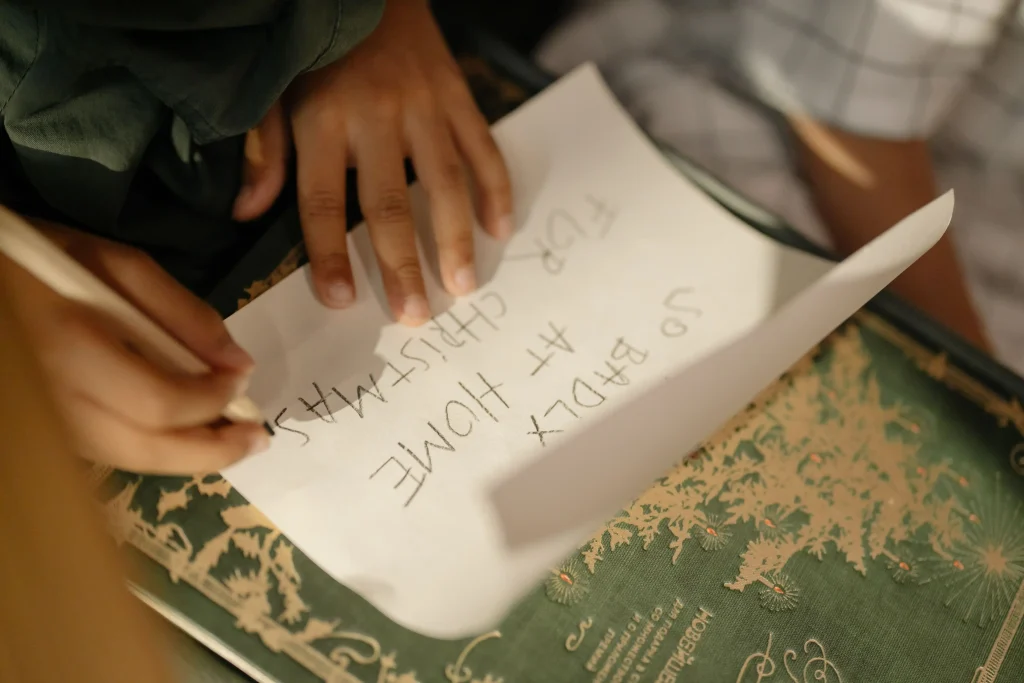
Inside was a Christmas letter from Dad.
It was the last one he had ever written.
And suddenly, Christmas was not just about missing him.
It was about hearing his voice again.
The Christmas Before Everything Changed
Before his death, Dad had been the person who made Christmas feel like Christmas.
He was not necessarily the loudest person in the room. He did not need to be.
He had his routines.
The lights had to be hung a certain way. The Christmas tree had to be positioned where everyone could see it. Holiday music started earlier than everyone else thought was reasonable. There was always an opinion about how the decorations should be arranged.
And there was always a letter.
Every year, sometime before Christmas, Dad would sit down and write to the family.
It was not a formal letter.
It was not particularly poetic.
It was simply his way of checking in.
He would talk about the year that had passed, mention what each family member had been doing, make a few jokes, offer some advice, and remind everyone that Christmas was a time to appreciate being together.
His children grew up expecting it.
As children, they thought the letters were funny.
As teenagers, they sometimes found them embarrassing.
As adults, they began to appreciate them.
But nobody understood just how important those letters would become.
When the House Becomes Quieter
After Dad died, the family continued celebrating Christmas, but something was missing.
That is one of the strange things about grief.
The person may be gone, but their absence seems to appear everywhere.
It can be the empty chair at the dinner table.
The favorite song that suddenly becomes difficult to hear.
The recipe nobody makes quite the same way.
The Christmas ornament that someone holds for a little too long before putting it on the tree.
Holiday traditions can make grief especially noticeable because traditions are built around repetition. We do the same things year after year, often without thinking about how deeply those rituals are connected to the people who created them.
When one of those people is gone, the tradition remains, but it feels different.
Research and grief-support organizations have long noted that holidays can intensify feelings of loss, particularly when familiar traditions remind families of someone who is no longer there. At the same time, continuing old traditions or creating new ones can give families meaningful ways to remember the person they have lost.
For this family, Christmas became a mixture of gratitude and sadness.
They decorated the tree.
They prepared the food.
They exchanged gifts.
They laughed.
But there were also moments when someone would stop and think, “Dad would have said something about this.”
Then they would smile.
And then they would miss him.
The Box in the Closet
Years passed.
Life moved forward, as it always does.
Children grew older. They started families of their own. There were new homes, new jobs, new responsibilities, and new Christmas traditions.
Dad remained part of family conversations.
His stories were repeated.
His favorite sayings became family jokes.
Someone would occasionally imitate the way he used to complain about Christmas lights.
Someone else would remember something he had done years earlier.
That is how people sometimes remain present after death.
Not physically.
But through stories.
Then one December, while looking for an old Christmas decoration, one of the family members found the box.
The box was dusty.
Inside were old holiday cards and letters.
And there it was.
A sealed envelope.
Dad’s handwriting was unmistakable.
The name on the front was written in his familiar handwriting, slightly slanted, with the same penmanship everyone recognized immediately.
For a moment, nobody wanted to open it.
It felt almost like opening a door to a room that had been closed for years.
Then someone finally did.
“Merry Christmas, Everyone”
The letter began simply.
“Merry Christmas, everyone.”
Those four words were enough to make the room quiet.
It was strange how quickly handwriting could bring someone back.
They could almost hear his voice.
The letter talked about the year.
There were ordinary observations. Things that seemed unimportant at the time.
He mentioned the weather.
He joked about how quickly the children were growing.
He talked about family plans.
He reminded everyone to make time for each other.
He wrote about being grateful for the people around him.
And, as always, he made a few jokes that made the family laugh.
Then came the part nobody expected.
Near the end of the letter, Dad wrote about the future.
He hoped that the family would continue getting together for Christmas.
He hoped they would keep the traditions that mattered.
But he also told them not to worry too much about keeping everything exactly the same.
People change.
Families change.
Life changes.
What matters, he wrote, is remembering why you gathered in the first place.
To be together.
The Meaning of an Ordinary Letter
The letter was not a grand final message.
Dad did not know it would become his last Christmas letter.
He did not know that years later, his family would read his words while sitting around a table without him.
That is what made it so powerful.
There was no attempt to create a final speech.
It was simply Dad being Dad.
And sometimes, that is what we miss most about people after they are gone.
Not the major events.
The ordinary things.
The way they said our name.
The way they laughed.
The way they complained about the television.
The way they made coffee.
The way they insisted everyone eat more.
The way they wrote “Merry Christmas” at the top of a piece of paper.
Grief is often filled with these small memories.
They can hurt.
But they can also become treasures.
When the Tears Finally Came
Someone read the letter aloud.
At first, there were smiles.
Then someone laughed at one of Dad’s jokes.
Then the laughter stopped.
Someone began crying.
Another person reached across the table and held their hand.
Nobody tried to stop the tears.
Nobody said, “Don’t cry.”
They simply let the moment happen.
Because sometimes remembering someone means allowing yourself to feel the absence as well as the love.
The letter had brought Dad into the room for a few minutes.
Not literally, of course.
But emotionally.
His words were there.
His handwriting was there.
His humor was there.
His reminders about family were there.
And for a little while, everyone felt connected to the man they missed.
The Christmas Letter Becomes a New Tradition
The family could have put the letter back into the box.
Instead, they decided to keep it somewhere safer.
They made a copy.
They placed one in a family memory book.
They saved another digitally.
And every Christmas, they began reading it together.
The letter became part of the celebration.
Not because they wanted to pretend Dad was still there, but because they wanted to remember that he had been there.
That distinction matters.
Remembering someone does not mean refusing to move forward.
It means carrying pieces of them forward with you.
Families who have experienced loss often create or maintain holiday rituals as a way of honoring loved ones. These can include displaying meaningful ornaments, preparing favorite recipes, listening to familiar music, sharing stories, or setting aside a special moment of remembrance.
The family did something similar.
They created a space for Dad in their Christmas without allowing his absence to take away every moment of joy.
A Gift That Was Never Meant to Be a Gift
There is something beautiful about the fact that Dad never intended the letter to become a gift.
He wrote it because he always wrote one.
He probably never imagined that his family would someday hold onto his words as one of their most precious Christmas memories.
That is how life works sometimes.
The things we think are ordinary can become extraordinary later.
A photograph taken casually becomes the last picture everyone treasures.
A voice message that seemed unimportant becomes something a family listens to repeatedly.
A handwritten recipe becomes a connection to a grandmother.
A Christmas letter becomes a conversation across time.
We rarely know which ordinary moments will become important.
That is why they are worth paying attention to while we are living them.
The Things We Leave Behind
When we think about what people leave behind, we often think about possessions.
A house.
Money.
Jewelry.
Furniture.
Photographs.
But sometimes the most important things people leave behind cannot be measured.
They leave behind traditions.
They leave behind stories.
They leave behind phrases that become family sayings.
They leave behind recipes.
They leave behind lessons.
They leave behind the way they loved people.
And sometimes, they leave behind a letter.
Dad’s letter reminded the family that his greatest legacy was never the decorations or the Christmas presents.
It was the importance he placed on being together.
Years after his death, the family was still gathering.
They were still telling stories.
They were still laughing.
They were still making new memories.
In that sense, his Christmas wish had come true.
Finding Comfort in the Holidays
For someone grieving during the holidays, there can be pressure to be happy.
Christmas advertisements show perfect families around perfect tables. Movies often end with everyone reunited. Songs fill shopping centers with messages of joy and togetherness.
But real families are not always experiencing a perfect holiday.
Someone may be grieving.
Someone may be separated from their family.
Someone may be spending Christmas alone.
Someone may be celebrating after a difficult year.
Someone may be trying to smile while missing a person who used to sit at the table.
There is no single correct way to experience the holidays after loss.
Some families may want to continue every tradition.
Others may need to change everything.
Some may want to talk about the person who died.
Others may need quiet.
Some may laugh.
Some may cry.
Many will do both.
What matters is making room for the emotions rather than expecting grief to disappear simply because the calendar says it is Christmas.
A Small Way to Remember Someone You Love
The story of Dad’s letter also offers a simple reminder for families.
Write things down.
Write the story.
Write the recipe.
Write the memory.
Write the Christmas letter.
We often assume we will remember everything.
We won’t.
Details disappear over time.
The sound of someone’s laugh becomes harder to recall.
The exact words they used may fade.
The little stories become incomplete.
Writing preserves something.
Maybe you can write a letter to your children every Christmas.
Maybe you can record family stories.
Maybe you can write down your favorite memories of your parents.
Maybe you can leave notes for the people you love.
They do not have to be profound.
They simply have to be yours.
Years from now, someone may treasure those words far more than you ever expected.
A Thoughtful Holiday Gift for Someone You Love
The holidays are also an opportunity to give something practical while still honoring the emotional meaning of the season.
For someone who enjoys hair care and self-care, the Blondegasm Hydration Bundle, featuring Hyper Hydro Shampoo, Conditioner, and Defense Oil, can make a thoughtful addition to a holiday gift list. The bundle is designed around a simple self-care routine, making it suitable for someone who enjoys turning everyday hair care into a little moment of personal care.
Blondegasm Hydration Bundle – Hyper Hydro Shampoo, Conditioner & Defense Oil

A product like this may seem unrelated to a story about grief and family memories, but that is part of what makes holiday gift-giving meaningful. Not every gift has to carry a huge message. Sometimes a thoughtful gift simply says, “I thought about you.”
And that can matter.
The Letter They Read Every Christmas
The family still has the letter.
It has been carefully preserved.
Every year, when Christmas comes around, someone brings it out.
The paper is older now.
The handwriting is still familiar.
The words have not changed.
But the people reading them have.
The children who once heard Dad’s Christmas jokes are older. Some now have children of their own. There are new faces around the table. New stories are being created.
And yet, Dad’s words remain part of the gathering.
They remind everyone that families are constantly changing, but love can remain remarkably consistent.
His letter was never supposed to be his final Christmas message.
But that is what it became.
And perhaps there is something comforting about that.
He did not leave behind a perfect goodbye.
He left behind himself.
His handwriting.
His humor.
His memories.
His hopes for his family.
His reminder to stay connected.
The People We Love Never Stop Being Part of Our Stories
Christmas eventually ends.
The decorations come down.
The lights disappear from the windows.
The leftovers are finished.
The wrapping paper is thrown away.
But memories remain.
That is why a simple letter can become so powerful.
It reminds us that people do not have to be physically present to continue influencing the lives they touched.
Dad was gone.
But his family still gathered.
They still laughed at his jokes.
They still remembered his traditions.
They still talked about him.
And now, every Christmas, they read his letter.
Maybe that is the real meaning of the last Christmas letter from Dad.
It was never really about the letter.
It was about love that continued after the person who gave it was gone.
It was about a family discovering that grief and happiness can exist in the same room.
It was about understanding that remembering someone does not mean refusing to move forward.
Sometimes, remembering is how we move forward.
And sometimes, the smallest things become the greatest gifts.
A photograph.
A recipe.
A Christmas ornament.
A familiar joke.
A handwritten envelope.
A few pages of ordinary words.
Words written by a father who had no idea that one day, his family would desperately need to hear from him again.
“Merry Christmas, everyone.”
And somehow, years later, he still was.