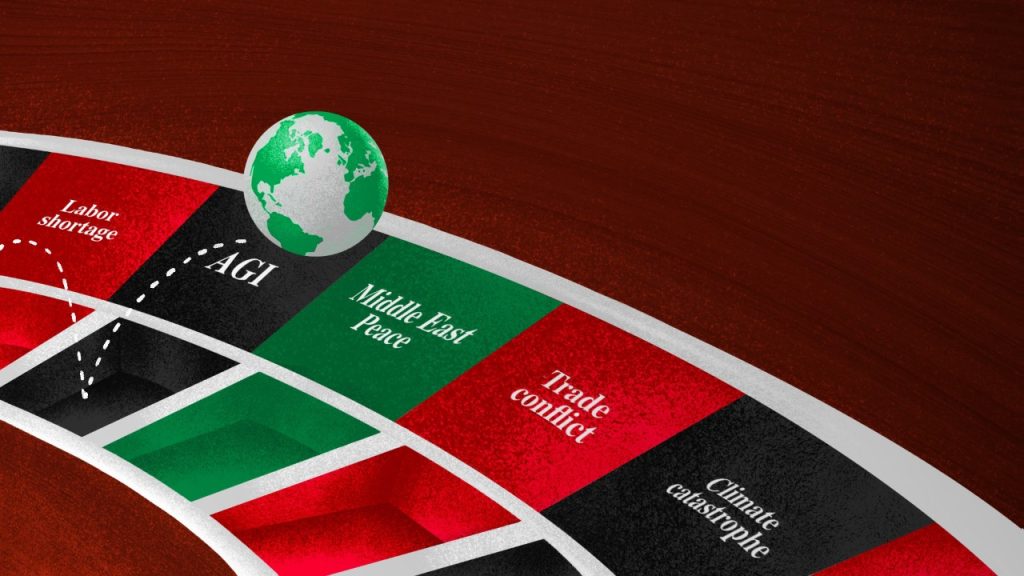

The act of giving a gift is one of humanity’s oldest and most enduring traditions, a simple transaction that carries immense emotional weight. It is meant to be a moment of pure connection, unmarred by the complexities of the outside world. Yet, in November 2025, the outside world is inescapable. Every beautifully wrapped package, every perfectly sourced item, and every timely delivered order is a silent testament to the tumultuous, interconnected global forces currently redefining the future of commerce.
For retailers, producers, and, most importantly, for the thoughtful consumer, the current events of this year have converged into a powerful and unprecedented challenge. We are living in an age of persistent supply chain volatility, driven by geopolitical conflicts; an age of economic moderation, forcing a sharp focus on value; and an age of uncompromising ethical demand, where the origin story of a gift is as important as the gift itself.
The era of easy, predictable consumption is over. The “perfect gift” in 2025 is no longer just about sentiment; it is about resilience, transparency, and intention. This deep dive explores the defining current events of the global landscape and how they are fundamentally transforming the art and science of thoughtful consumption, proving that understanding world affairs is now essential to finding the right gift.
1. The Geopolitical Quake: When Conflict Reroutes Commerce
The most dramatic current event impacting the price and availability of physical gifts is the unprecedented volatility of global logistics. In 2025, supply chains are no longer simple pipelines; they are high-risk environments navigating trade wars, maritime crises, and the strategic weaponization of raw materials. This environment fosters a pervasive “risk-off” sentiment across financial markets and fundamentally alters operational strategies across all retail sectors [3.1].
The Red Sea Crisis: A Permanent Detour
The most immediate disruption to goods destined for Western markets is the persistent crisis in critical maritime chokepoints. The Red Sea shipping crisis, which intensified throughout 2024 and continues unabated into November 2025, remains a primary obstacle [3.1].
- The Cost of Safety: The sustained threat to commercial vessels has forced most large container shipping companies to bypass the Suez Canal and sail the much longer route around Africa via the Cape of Good Hope [3.2]. This detour adds between 10 to 14 days to the transit time for shipments from Asia to Europe [3.1].
- Inflationary Pressure: This extended journey requires more fuel and necessitates the use of more vessels and crew, causing spot and charter rates for container shipping to remain significantly above pre-crisis levels [3.1]. This inflationary pressure is baked into the price of consumer goods, from electronics components to apparel, meaning a higher cost is passed directly to the consumer, even as global inflation generally moderates [3.1]. For the shopper, this means the window for ordering unique or internationally sourced gifts shrinks, and the premium for last-minute or rushed shipping skyrockets.
The New Trade War and the Shift to Nearshoring
Beyond active conflict, trade friction—most notably the persistent US-China trade and technology rivalry—is compelling retailers to undertake a massive and costly strategic overhaul of their sourcing networks [3.1]. The looming threat of new tariffs and existing import restrictions means that half of global companies are already adjusting supply chains to avoid tariff-impacted countries [3.4].
- The Nearshoring Imperative: This has accelerated a massive push toward nearshoring, where production is moved closer to the end consumer, often to countries in North America, Europe, or allied nations [3.2]. While this strategy builds resilience and insulates against future geopolitical shocks, it is not without cost. Nearshoring involves significant investment in new infrastructure and often means accepting higher labor and production costs than those in traditional manufacturing hubs [3.2, 3.5].
- The Consumer’s Benefit and Burden: The benefit to the gift shopper is a more reliable delivery timeline and often a higher degree of visibility into the supply chain. The burden, however, is that the cost of these investments and the increased regional production expenses contribute to higher retail prices [3.2]. This forces the consumer to recognize that supporting a more resilient, politically de-risked supply chain requires paying a “geopolitical premium.”
Resource Weaponization and Scarcity
A more insidious form of geopolitical risk is the weaponization of critical minerals. In a world increasingly dependent on technology, certain nations’ near-monopolies on rare earth elements create systemic fragility. For example, export restrictions on critical minerals like yttrium (essential in many high-tech electronics) have led to an extraordinary price surge—in some cases by over 1,400%—due to artificial scarcity [3.1].
This means the cost and availability of popular tech gifts, from high-end headphones to sophisticated smart home devices, are directly exposed to the strategic decisions of foreign governments. Retailers selling these items must proactively diversify their sourcing, a complex process that introduces delay and further risk, underscoring how deeply geopolitics is embedded in the simplest holiday purchase.
2. The Economic Squeeze: The New Calculus of Value
Against the backdrop of geopolitical chaos, the global economy continues to navigate a path of moderate, yet fragile, growth. The current economic outlook is characterized by a continued effort to tame inflation while managing subdued growth prospects.
Slower Growth, Persistent Price Pressure
Despite monetary policymakers in major economies having room to cut rates as inflation moderates, global growth remains sluggish [1.1]. The IMF projects a slowdown to 3.2% global growth in 2025, and the World Bank notes that the 2020s are on track for the slowest pace of GDP growth since the 1960s [1.2, 1.3].
Crucially, while headline inflation is receding, the cost-of-living squeeze—fueled by high energy and food prices—remains a dominant concern for consumers [1.5, 4.4]. This sustained pressure has profoundly altered the psychology of consumption, particularly in the gifting space.
The Shift to “Value” Over Volume
The consumer of 2025 is not simply buying less; they are buying smarter. They are engaging in a rigorous search for value, which extends beyond the lowest price tag.
- Longevity and Quality as Value: In a volatile economy, gifts that last are prioritized. The shift is towards durability and timelessness—a quality leather good, a piece of investment jewelry, or a carefully restored vintage item. The consumer is calculating the total cost of ownership and the emotional return on an item. This trend provides a distinct advantage to brands known for craftsmanship and robust warranties, as they represent a secure investment in an insecure world.
- The Experiential Economy: As physical goods become fraught with supply chain risk and price volatility, experiential gifts continue to surge in popularity. Subscriptions, travel vouchers, and courses are inflation-resistant and immediately consumable, offering immediate gratification and a lower carbon footprint [4.4]. The gift of an experience aligns perfectly with the current consumer focus on well-being and making memories over acquiring more “stuff.”
- Private Label and the Sustainable Bargain: Economic constraints are typically a boon for private-label products (store brands) [4.3]. What is unique about 2025 is that this growth is being driven not just by lower price, but by the increasing number of private-label brands that incorporate verifiable sustainability claims [4.3]. This provides consumers with a powerful option: a quality, ethical product that helps manage budget constraints—a clear signal to major brands that they cannot afford to decouple ethics from affordability.
3. The Moral Compass: Ethical Demand and the Transparency Mandate
Perhaps the most long-lasting transformation in the gifting landscape is the elevation of ethical and environmental considerations from a niche concern to a market prerequisite. The rise of conscious consumerism means that the “why” and “how” of a gift’s creation are non-negotiable parts of its quality.
The Sustainability Premium
Despite the economic pressures, consumers are not abandoning their values. The PwC 2024 Voice of the Consumer Survey found that consumers are willing to pay, on average, a 9.7% premium for goods that are sustainably produced or sourced [4.4]. This willingness to pay for a better planet demonstrates that for nearly all consumers (85% of whom report experiencing the disruptive effects of climate change firsthand), sustainability is a priority that overrides price sensitivity for considered purchases [4.4].
Consumers are looking for tangible attributes that prove ethical practice, including:
- Production methods and recycling potential (40%)
- Eco-friendly packaging (38%)
- Positive impact on nature and water conservation (34%) [4.4].
The Fight Against Greenwashing and Eco-Exhaustion
This period of heightened scrutiny has also created a deep-seated suspicion toward unsubstantiated claims. Consumers are suffering from “eco exhaustion,” believing that corporations are passing too much responsibility to the individual and that many brands are guilty of greenwashing [4.5]. This lack of trust is a major headwind for large, established brands, with many consumers, particularly Gen Z and Millennials, increasingly abandoning brands that fail to live up to their sustainable claims [4.5].
To counteract this, gifting retailers must embrace radical transparency. Simple labels are no longer trusted. Consumers want quantifiable data and impact specifics on materials, waste saved, and the full lifecycle of the product [4.5].
- Ecodesign and the Circular Gift: The focus on ecodesign—incorporating environmental considerations from the initial design phase through to the end of a product’s life—is becoming the industry standard [4.2]. The most thoughtful gifts are those that are designed to be easily repaired, reused, or recycled, supporting the movement toward a circular economy [4.2].
- The Geopolitical Ethics Test: Ethical scrutiny has also expanded to include geopolitical and social boycotts. Consumer groups are actively rating retailers based on their affiliations, supply chain labor practices, and political ties to international conflicts [4.1]. This means that the political and ethical choices of a corporation are now an integral part of the consumer’s purchase decision, adding another layer of complexity to the search for an ethically “clean” gift.
Conclusion: The Intentional Gift of 2025
The landscape of gifting in November 2025 is a mirror reflecting the world’s most pressing current events. Geopolitical conflicts are lengthening delivery times and raising costs. Economic shifts are forcing a hard look at what constitutes true value. And a powerful, ethically motivated consumer base is demanding proof of purpose.
The challenge for the gifting industry is to weave these disparate threads into a coherent, delightful experience for the consumer. The roadmap forward is defined by intention and resilience:
- Supply Chain Fortification: Investing in nearshoring and diversified sourcing to ensure predictable availability.
- Value Redefinition: Moving beyond price to sell quality, durability, and enriching experiences.
- Ethical Credibility: Committing to radical transparency, third-party certification, and genuine ecodesign to rebuild trust.
The perfect gift today is not merely an object; it is a conscious choice—a product that arrives reliably, offers lasting value, and carries a story of ethical production that aligns with the recipient’s values. By understanding and addressing the major currents of 2025—from the Red Sea detour to the demand for a sustainable premium—retailers can ensure that the tradition of giving not only survives but thrives in this new era of thoughtful consumption.